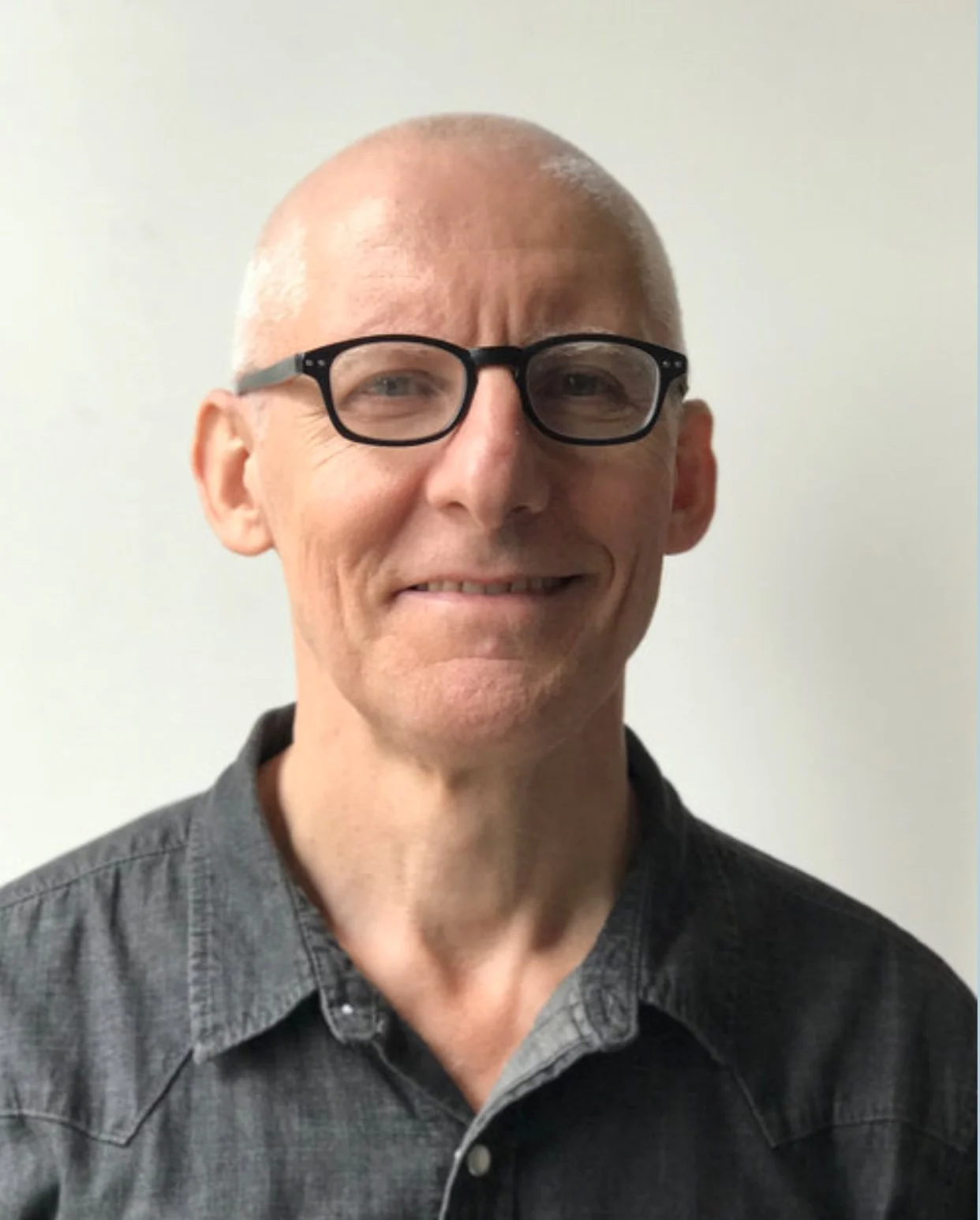
Filmmaker and video artist working in experimental nonfiction and moving-image installation. My work explores labor, mortality, the environment, material transformation, and the reciprocal relationship between the observer and the observed.
Biography
Paweł Wojtasik was born in Łódź, Poland. His mother, a writer, was silenced by Poland’s communist government, and the family left the country when he was sixteen. They lived for three years in Tunisia, where he continued making films with a Russian 8mm camera. In 1972, he came to the United States as a refugee, settling in New York with his mother and sister.
Wojtasik trained as a painter and received an MFA from Yale University in 1996. He later moved toward film, video, and moving-image installation. From 1998 to 2000, he lived and practiced at Dai Bosatsu Zendo, a Zen monastery in the Catskill Mountains of New York State. He continues to return there for retreats, and contemplative practice remains closely connected to his work as an artist and teacher.
His films and installations have examined labor, mortality, animals, environmental destruction, material transformation, and the relation between the observer and the observed. His work includes The Aquarium, filmed primarily in Alaska; Below Sea Level, a 360-degree panoramic installation commissioned by MASS MoCA and later presented in Prospect.2 in New Orleans; Pigs, shown at the New York Film Festival and Berlinale Forum Expanded; At the Still Point, a five-channel installation filmed in India; and Single Stream, made with Toby Lee and Ernst Karel and presented at the Museum of the Moving Image and the Whitney Biennial.
His feature film End of Life, co-directed with John Bruce, premiered at Doclisboa and had its United States premiere at the New York Film Festival. Every Pulse of the Heart Is Work, filmed in Varanasi and Kerala, India, was presented at the Museum of Modern Art as part of Doc Fortnight 2020. His current projects include Of Humans and Stones, developed in close collaboration with sociologist and glassblower Erin O’Connor, and The Seasons, a panoramic film created with composer Sebastian Currier.
Wojtasik lives and works in Brooklyn, New York.
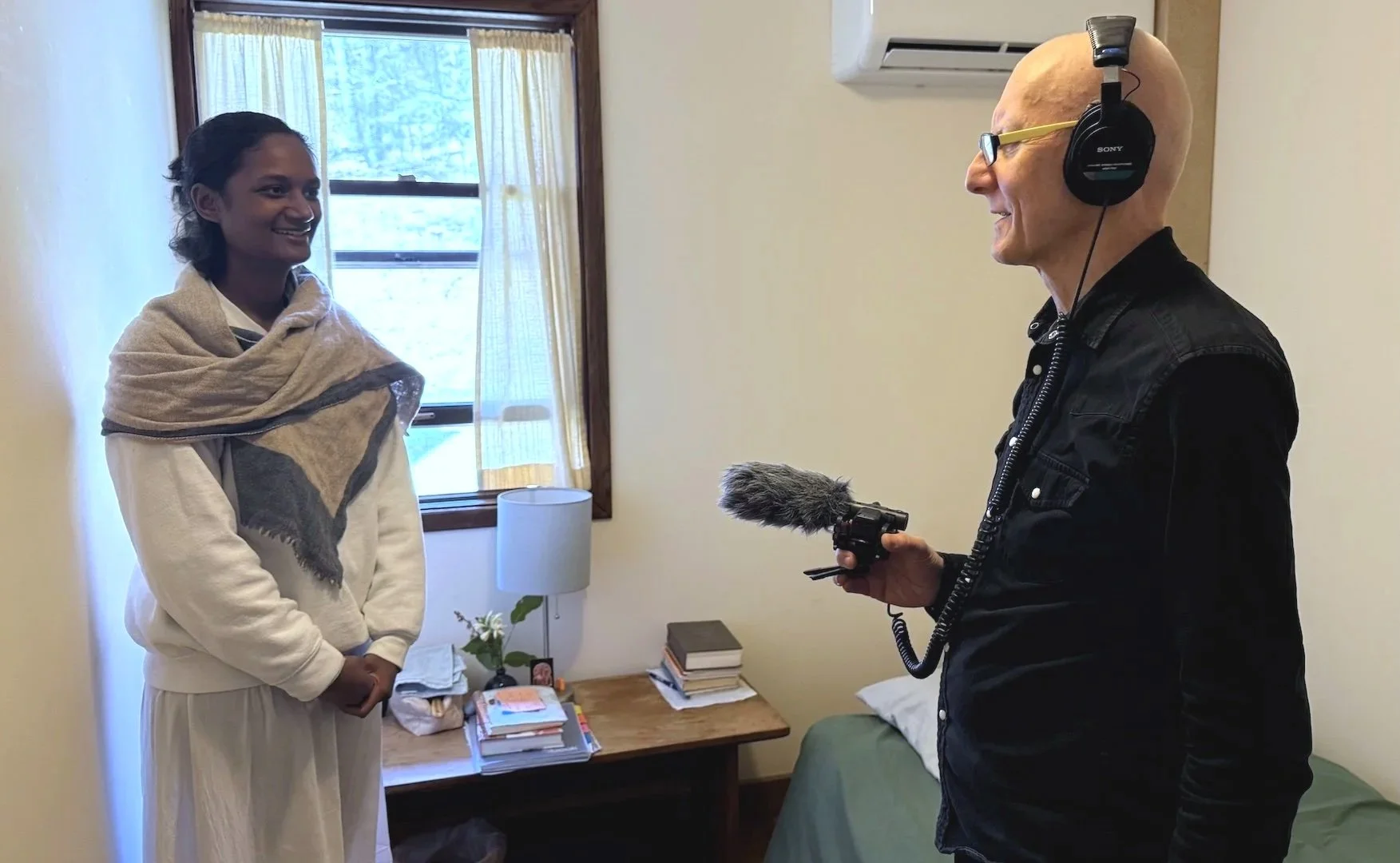
Recording an interview with Thinuri, Dai Bosatsu Zendo, 2025
Teaching and Mentorship
My present work is primarily in film and video, but I was trained as a painter and continue to draw. My MFA is in painting, and my education took place within a broad visual-art context, including study with Mel Bochner, Michael Roemer, William Bailey and studio visits with artists such as Elizabeth Murray, Brice Marden, Bill Jensen, and Jake Berthot. I have also collaborated closely with composers, musicians, sound artists, writers, and performers. These experiences allow me to engage with artists across disciplines and to respond to the particular demands of a work, regardless of medium.
The mentor who influenced me most deeply was the filmmaker Michael Roemer. His teaching felt less like instruction than a shared process of wondering and questioning—often humorous, but always serious. Everyone was encouraged to contribute, and differences among participants were treated as strengths. Projects became starting points for a wide flow of associations, creating a tremendous sense of possibility. This remains an important model for how I work with artists.
I do not try to lead artists toward a shared aesthetic. I try to understand what each person is attempting, what is already alive in the work, and where greater attention, precision, or courage may be needed. I am interested in form, but also in the conditions from which form arises: perception, ethics, trust, collaboration, and the artist’s relation to materials and to other people.
David MacDougall’s chapter “Meaning and Being” in The Corporeal Image has helped clarify something central to my teaching: images are made and received through the body. I encourage artists to remain aware of their bodily presence while working—their breathing, posture, movement, and relation to the surrounding space. This can change the quality of attention and the relation between the artist and what is being engaged with.
“I thought a lot about what you said at the workshop about being grounded and having sustained attention, and even managed to apply some of the things we discussed. It helped a lot.”
—Kannan, workshop participant, Colombo, 2012
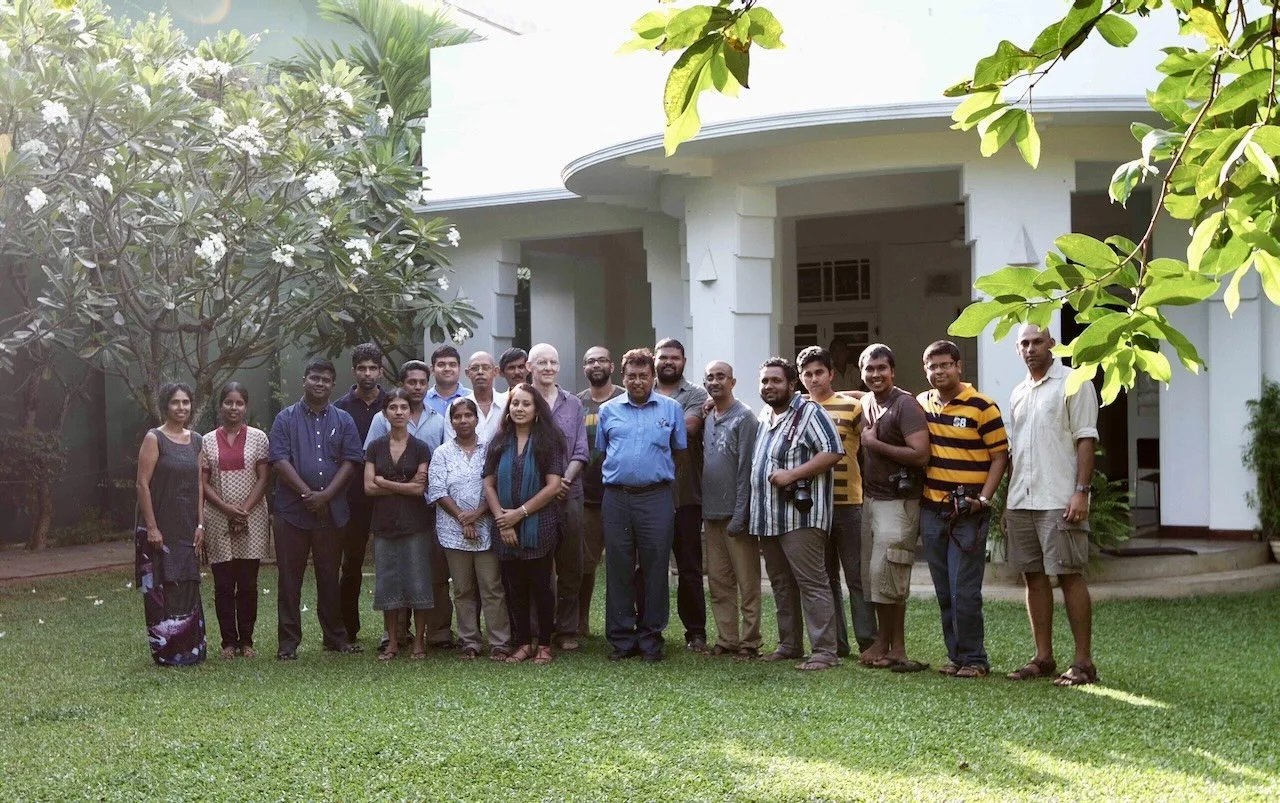
Participants in a two-day documentary filmmaking workshop at the Fulbright Commission, Colombo, Sri Lanka, 2012.
Contemplative Practice
From 1998 to 2000, I lived and practiced at Dai Bosatsu Zendo, a Zen monastery in the Catskill Mountains of New York State. I continue to return several times a year for retreats and maintain an active relationship with the monastery. This practice has become inseparable from my work as an artist and teacher. It has led me to question the division between inner and outer experience: perception is not a detached subject looking at an external object, but a field in which body, awareness, and environment continually shape one another.