AT THE STILL POINT
2010 · 29 minutes (loop) · 5-channel installation
Installation by Paweł Wojtasik
Soundscape: Stephen Vitiello
Software design/technical assistance: Gian Pablo Villamil
Audio Recording: Paul Geluso (Harvestworks, New York)
Suzanne Kim, curator, Smack Mellon
Kathleen Gilrain, executive director, Smack Mellon
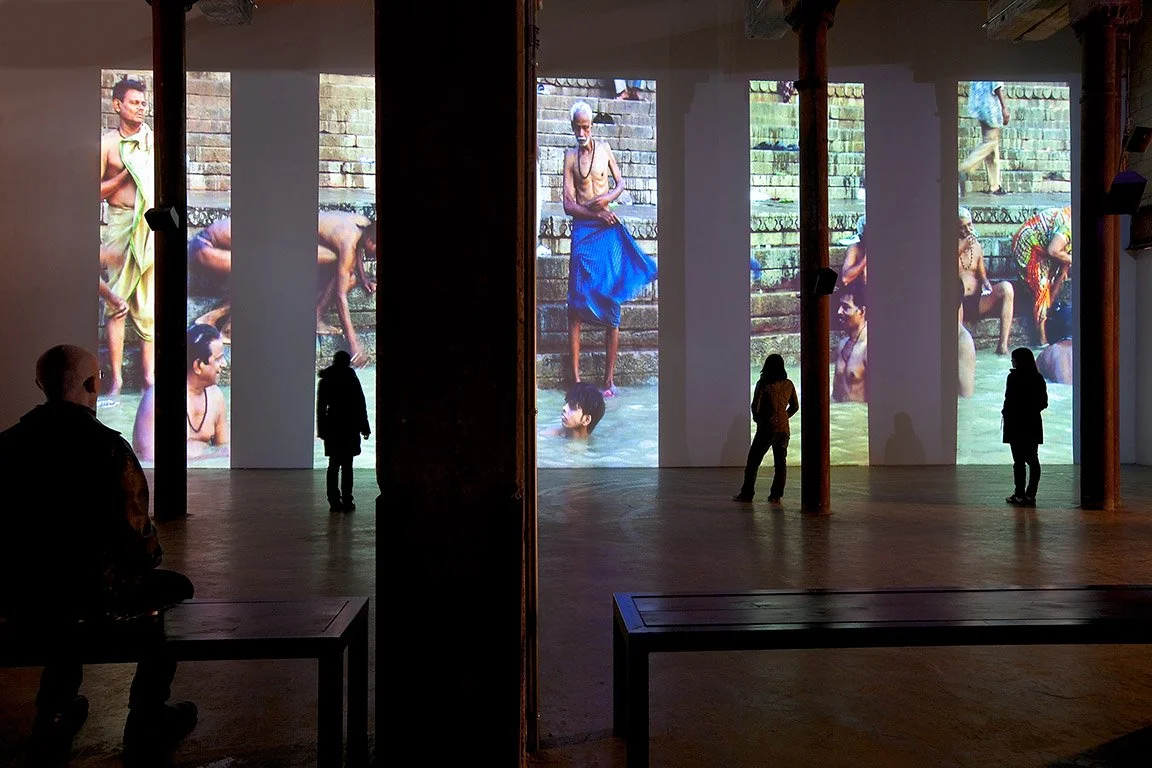
At the Still Point brings together images of labor, destruction, death, and renewal in India, held within five vertical projections and an immersive soundscape by Stephen Vitiello.
About the Work
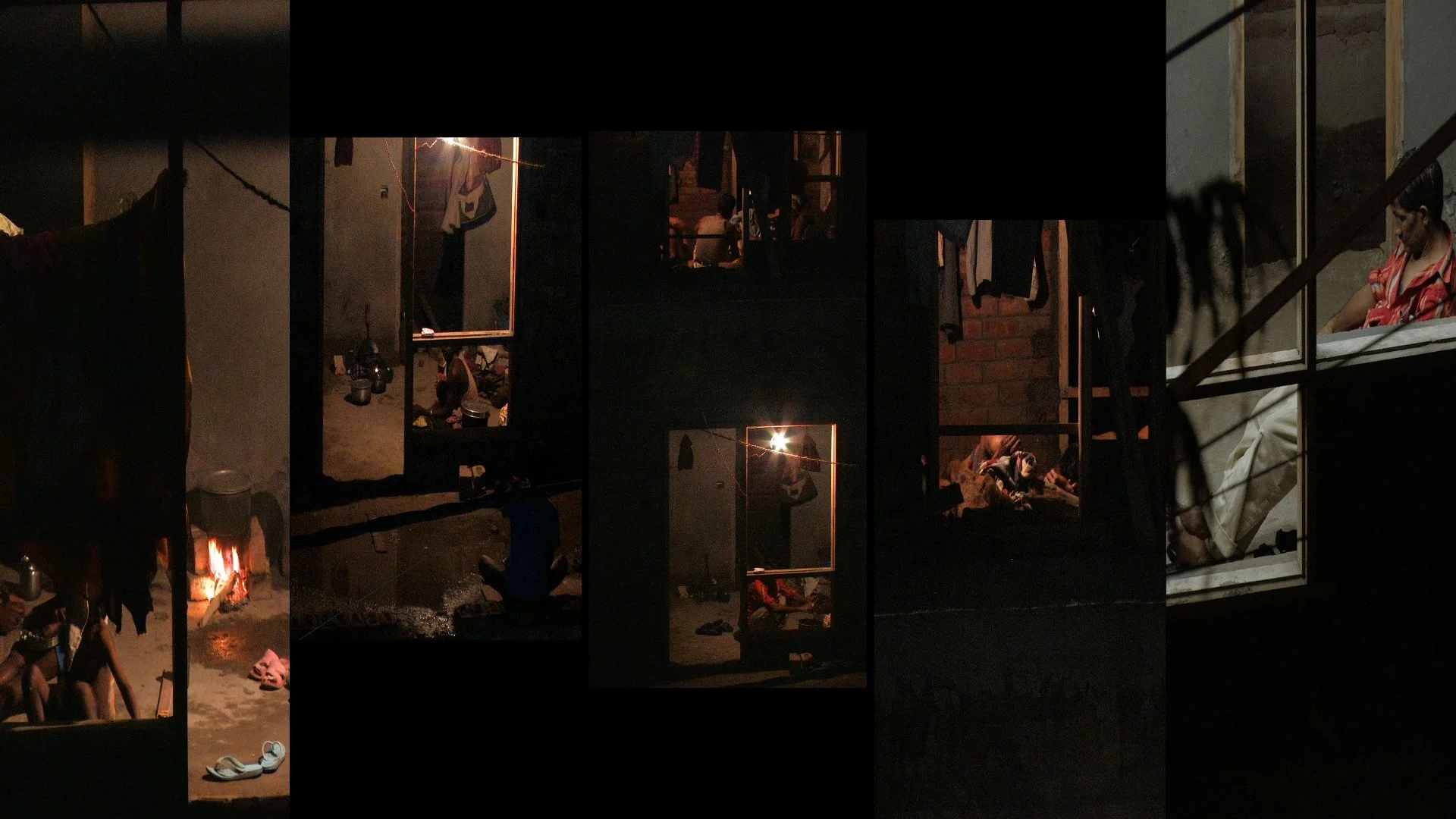
At the Still Point brings together footage filmed at several sites in India: a shipbreaking yard in Alang, where retired vessels are dismantled by hand; Dhobi Ghat in Mumbai, where workers wash clothing in rows of stone basins; cremation rites on the banks of the Ganges in Varanasi; and migrant construction workers in Delhi. Across these places, the work observes labor, destruction, death, and renewal as interconnected processes.
The title comes from T. S. Eliot’s phrase “at the still point of the turning world.” I was struck by the steadiness of mind with which the workers carried out difficult and repetitive tasks. Their physical activity could be immense, yet within it I perceived a condition of stillness.
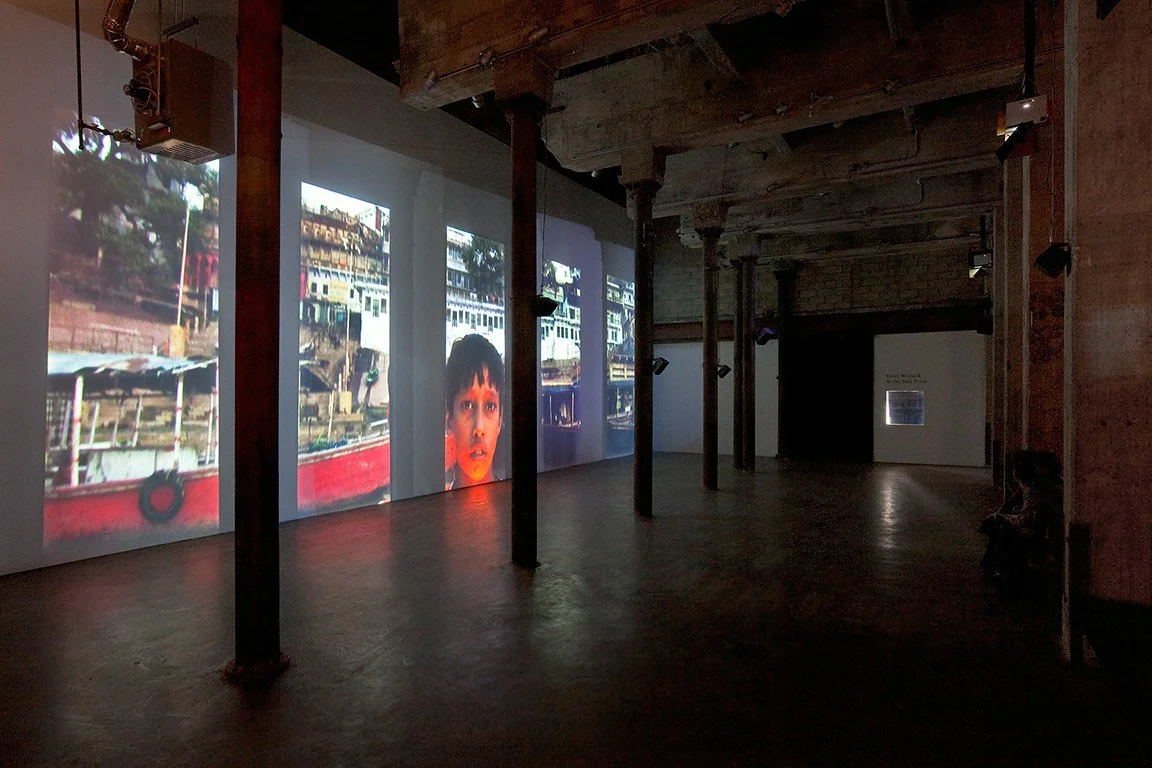
Much of the footage was made with the camera turned on its side, creating tall vertical images. In the original installation, five projections appeared in changing combinations: sometimes all five were active; at other moments, a single image remained surrounded by darkness. The vertical arrangement recalls stained-glass windows or the panels of an altarpiece, giving monumentality to the workers and their labor. Stephen Vitiello’s immersive soundscape draws together the sounds of water, machinery, tools, voices, and ritual.
Writing on the Work
Robert Shuster, “Paweł Wojtasik: ‘At the Still Point,’” The Village Voice, March 30, 2010
Shuster describes the installation’s long takes and monumental five-channel scale, focusing on the dismantling of ships, cremation on the Ganges, and labor at Dhobi Ghat. He sees the workers’ repetitive tasks as almost timeless, writing that the careful framing turns labor into “a vision of eternity” and that the work transforms bleakness into a quiet meditation on the human condition.
Karley Klopfenstein, “Paweł Wojtasik at Smack Mellon,” artcritical, April 16, 2010
Klopfenstein emphasizes the installation’s relationship to the architecture of Smack Mellon: five projections, each approximately six feet wide and twenty-one feet tall, extending across the gallery wall with a sculptural presence. She discusses the movement between panoramic views and close observation, Stephen Vitiello’s soundscape, and the work’s juxtaposition of labor, death, rebirth, destruction, and renewal.
Scott MacDonald, “Perception as Transcendence: Interview with Paweł Wojtasik,” Film Quarterly, Winter 2011
MacDonald places At the Still Point in relation to the tradition of the city symphony, describing it as something like “a day in the life of India.” He discusses the work’s five-image format, its ability to hold expansive views and interwoven realities, and its recurring relation between work, death, decay, and renewal.
Presentation
Smack Mellon, Brooklyn, New York, 2010
Solo exhibition; five-channel installation
The exhibition ran from March 6 through April 11, 2010, and the five projections extended more than thirty feet across the gallery wall, with each vertical image approximately twenty-one feet high.