SINGLE STREAM
2014, 23 minutes, DCP - CinemasScope, 5.1 sound
Directed by Paweł Wojtasik, Toby Lee, Ernst Karel
Recorded at Casella Materials Recovery Facility in Charlestown, Massachusetts
Picture: Paweł Wojtasik, Toby Lee
Sound: Ernst Karel
Cinematography/Steadicam: Sergei Franklin
Produced by Toby Lee and Paweł Wojtasik. Associate Producer: Jonathan Hogg; executive producer: Jesse Eidsness
Distributed by Cinema Guild
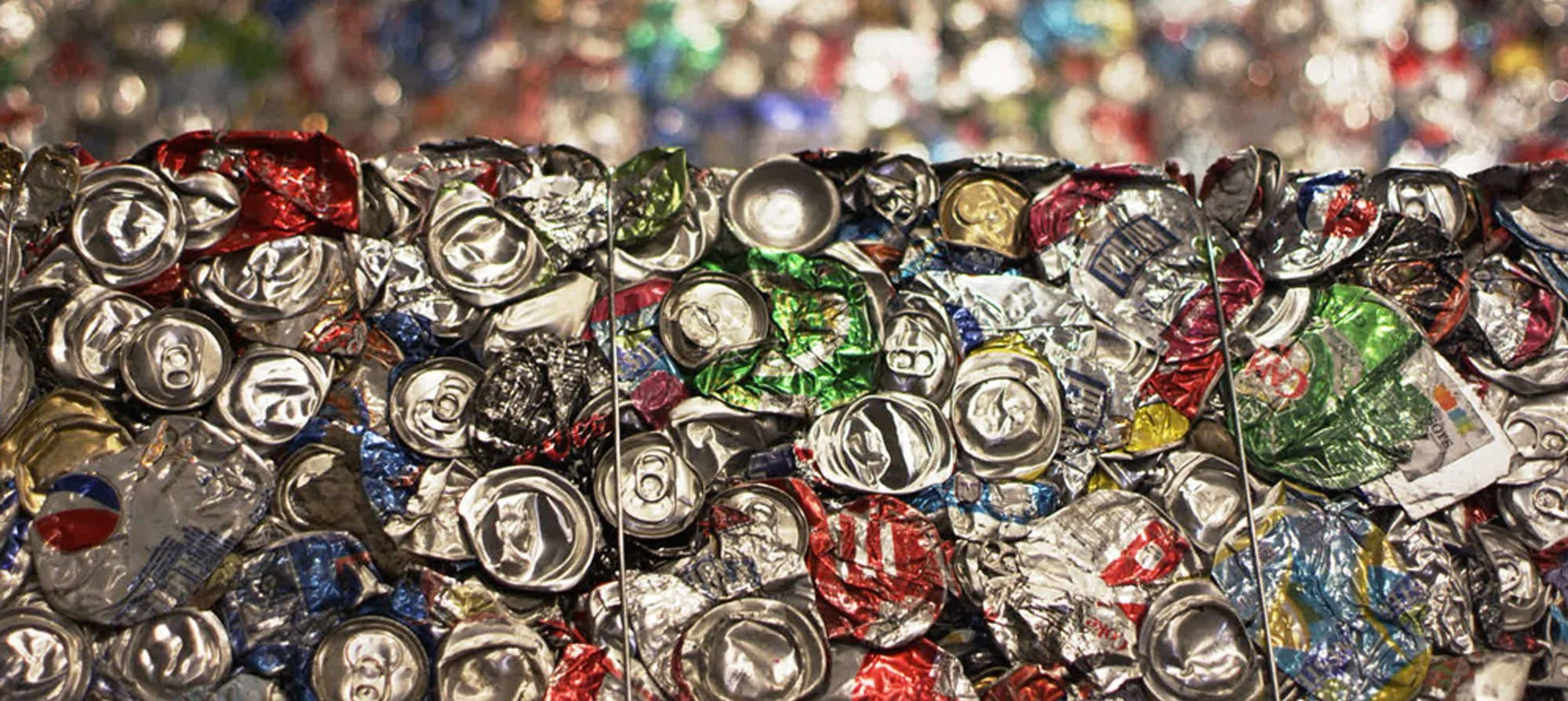
Single Stream is an observational portrait of a recycling facility, where the vast residue of consumer life moves through an intricate system of conveyor belts, machines, and human labor. Filmed with close attention to rhythm, texture, sound, and repetition, the work transforms this industrial process into a dense choreography while confronting the scale, persistence, and material afterlife of waste.
About the Film
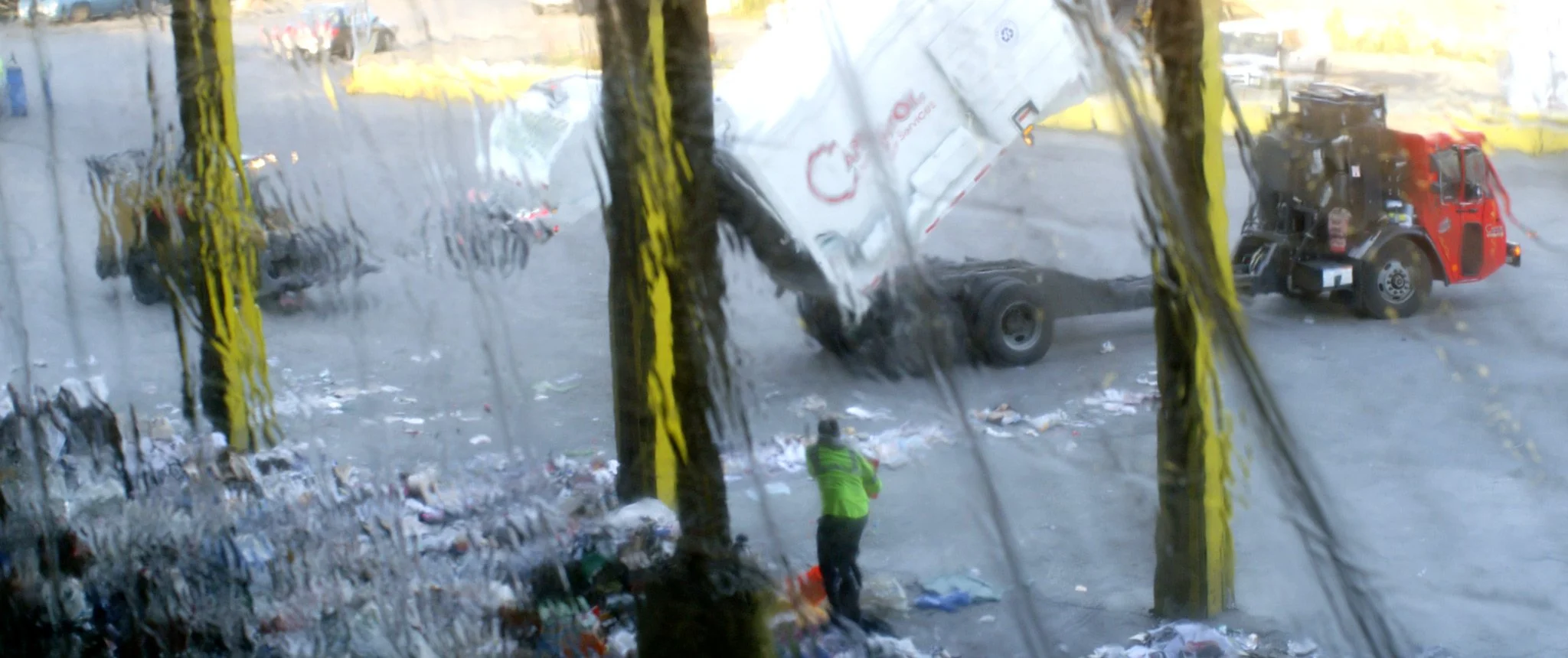
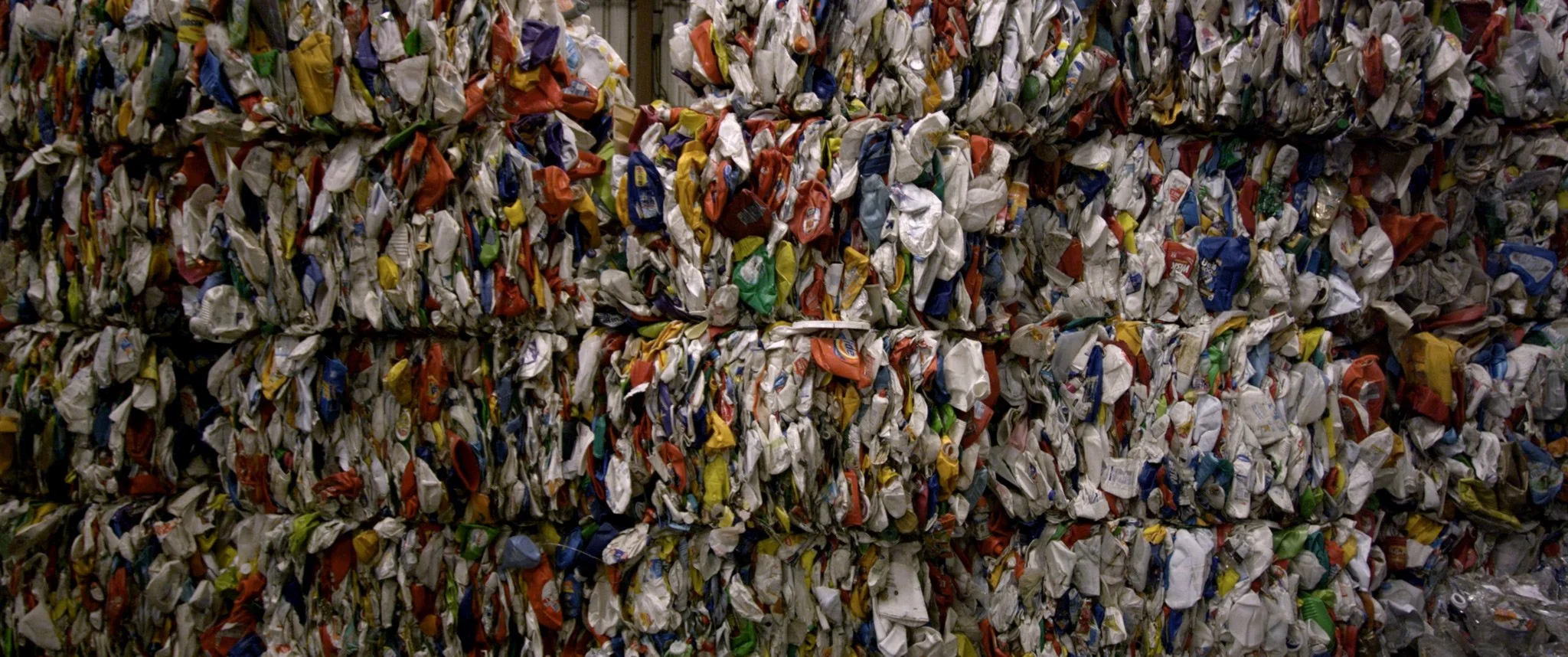
Single Stream takes a close look at the problem of waste through a visual and sonic exploration of a materials-recovery facility in Charlestown, Massachusetts. Its title refers to the recycling system in which glass, metal, paper, and plastic are collected together and separated later inside a specialized plant.
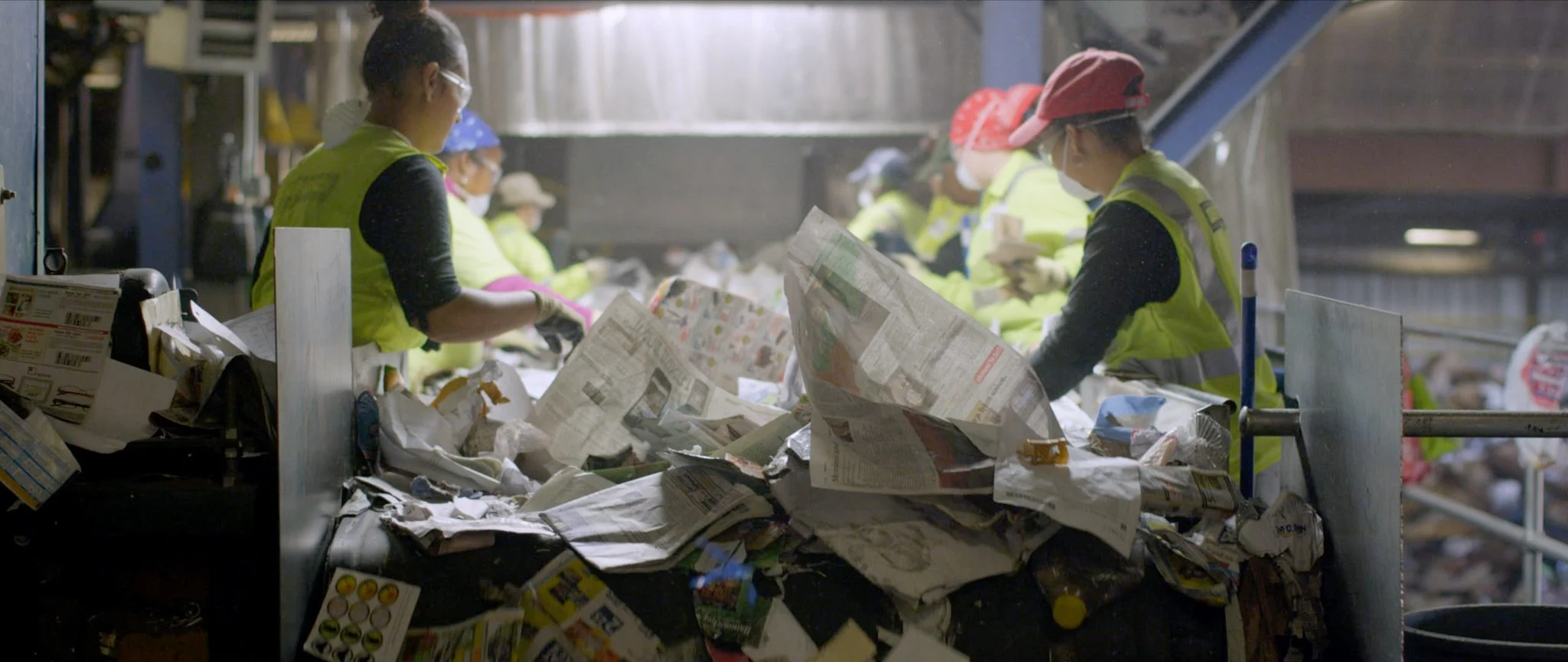
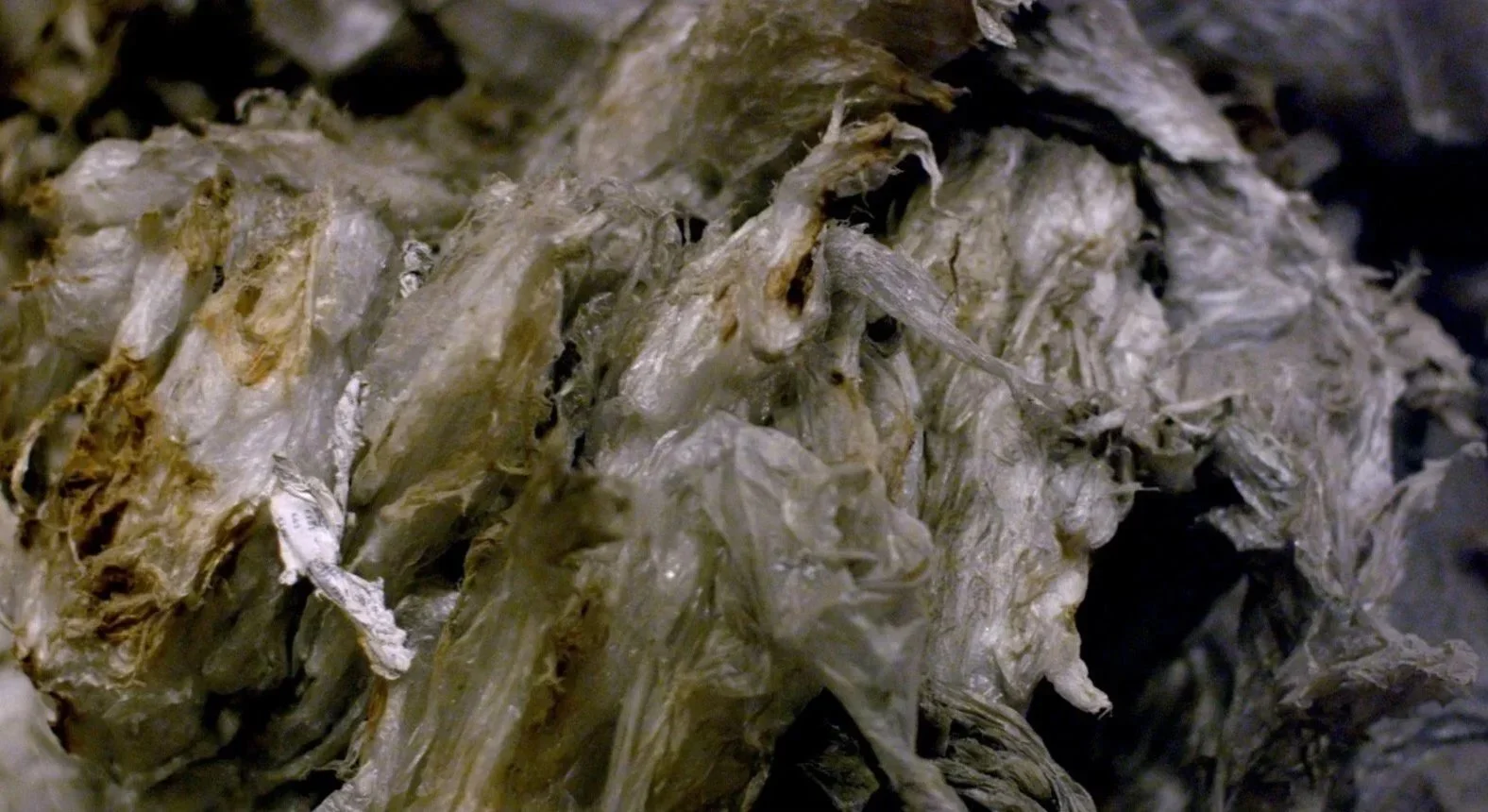
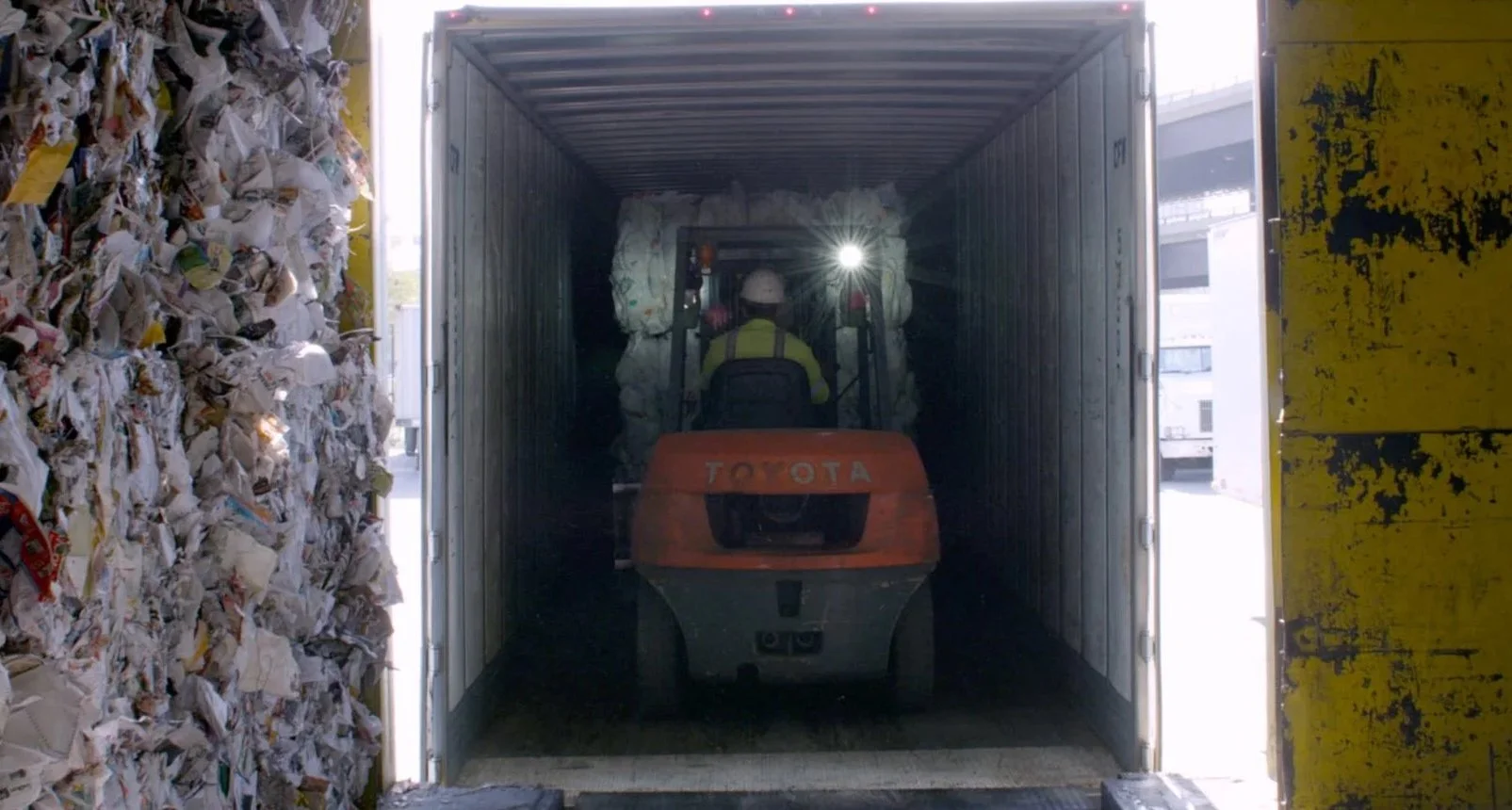
Within the cavernous building, conveyor belts, sorting mechanisms, compressed air, machinery, and human workers form an immense system that operates with remarkable coordination. Materials are carried, separated, crushed, shredded, and compressed in a continuous process that resembles both a disassembly line and an industrial digestive tract.
Blurring observation and abstraction, the film moves between recognizable objects and fields of color, texture, motion, and sound. Slightly slowed images and Ernst Karel’s dense sonic composition give the movement of waste a mesmeric quality, making familiar consumer objects appear strange after they have been used, discarded, and reduced to their material composition.
The film makes visible a process that ordinarily remains outside public view. By confronting viewers with the scale and persistence of what society discards, Single Stream becomes a meditation on material transformation, impermanence, and the consequences of a culture of excess.
Watch the Film
Available for educational and institutional exhibition through Cinema Guild.
Single Stream is available to stream on DAFilms.
Interview and Writing
The Brooklyn Rail conversation with Chi-hui Yang
A substantial discussion of the work’s origins, panoramic form, material transformation, consumer culture, impermanence, abstraction, and the relation between image and spatialized sound.
Genevieve Yue, “Festivals: Ann Arbor,” Film Comment
A critical account of the cinema version, emphasizing the film’s approach to abstraction, its slowed movement, industrial soundscape, and the transformed status of familiar consumer objects as waste.
Installation Versions
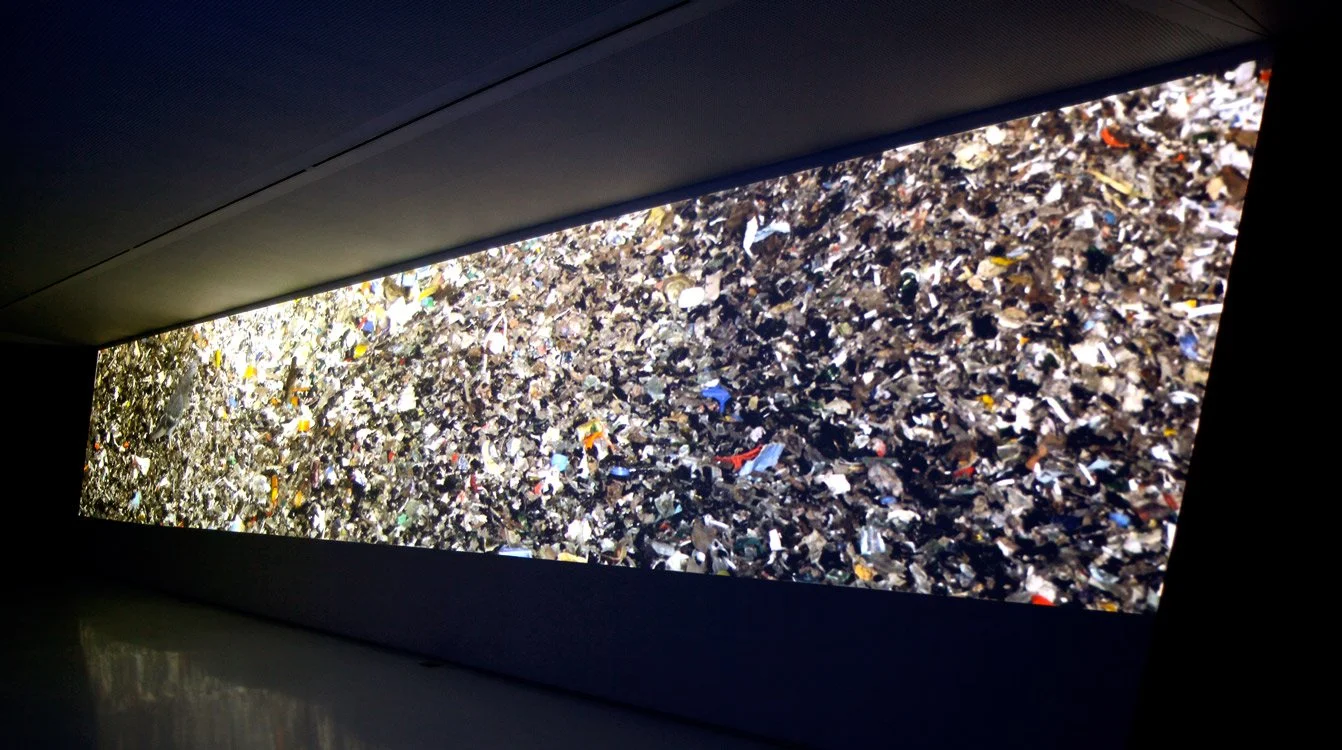
Single Stream was originally conceived as a panoramic video-and-sound installation for the Museum of the Moving Image in New York. The work was projected as a single seamless image measuring approximately 50 by 8 feet, using five projectors across the museum’s unusually elongated lobby screen.
The installation’s 6.5:1 aspect ratio grew directly from the architecture of the recycling facility and the lateral movement of its conveyor belts. Rather than remaining seated before a conventional screen, viewers could stand close to the image and move alongside it, physically tracing the flow of materials across the gallery. The extreme scale made the image deliberately overwhelming, echoing the excess represented within it.
Ernst Karel’s four-channel sound was spatialized along the length of the screen, placing hisses, impacts, clanging, motors, and other industrial sounds at different points within the panoramic field. The result was an environment in which image, sound, architecture, and the viewer’s movement became inseparable.
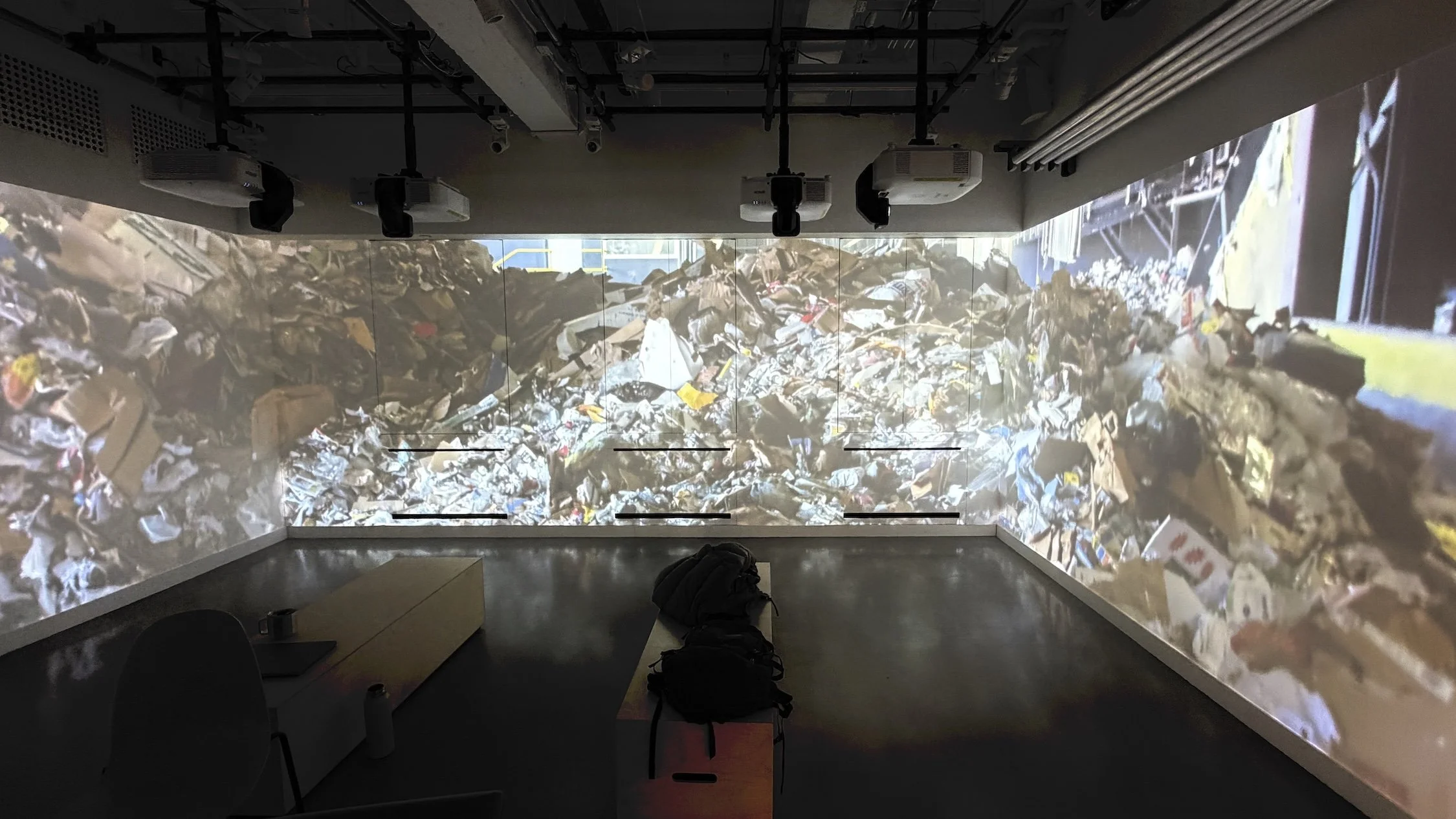
A later installation at the Hewitt Gallery of Art at Marymount Manhattan College expanded the work across three walls, surrounding viewers with the flow of refuse and turning the recycling facility into a more fully immersive spatial experience.
Selected Screenings and Presentations
Taiwan International Documentary Festival, New Taipei City, 2026 — A Retrospective of the Sensory Ethnography Lab
Hewitt Gallery of Art, Marymount Manhattan College, New York, 2026 — immersive installation across three gallery walls
Locarno Film Festival, 2014
Traverse City Film Festival, 2014
Ann Arbor Film Festival, 2014 — world premiere of the cinema version
Whitney Biennial, 2014
Flaherty NYC, Anthology Film Archives, 2014 — preview screening
Museum of the Moving Image, New York, 2013 — panoramic installation